

Root Canal Choice Guide: General Dentist vs. Endodontist
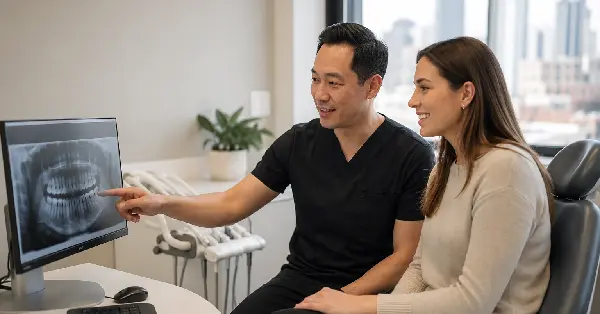
Tooth pain can make you want the fastest appointment possible. But a common question is still worth answering first: should you see a general dentist, or an endodontist, for a root canal? If you searched for Endodontist San Francisco, you are probably dealing with symptoms that feel urgent, or you have been told your tooth may be complicated.
This guide explains how treatment planning typically works, what makes a case more complex, and how to choose the right starting point when you are looking for a dentist near you in San Francisco.
TL;DR - How To Decide Who To See First
You can often start with a general dental exam to confirm the diagnosis. If the tooth is complex, previously treated, or hard to numb, your dentist may recommend an endodontist for specialized root canal care.
- Start with diagnosis: pain is not always a root canal problem, so an exam and X-rays matter.
- General dentists do many root canals: especially straightforward cases on teeth with typical anatomy.
- Endodontists focus on complexity: retreatment, cracked teeth, difficult anatomy, or severe infection.
- Ask the right questions: what is causing the pain, what are the options, and what restoration is needed after treatment.
- Do not delay swelling or severe pain: get evaluated as soon as possible.
What Is an Endodontist vs. a General Dentist?
A general dentist provides comprehensive care like exams, cleanings, fillings, crowns, and many types of restorative treatment. Many general dentists also perform root canal therapy.
An endodontist is a dentist who focuses on diagnosing tooth pain and treating problems inside the tooth (the pulp and root canal system). When you see an endodontist, the visit is usually centered on confirming the cause of symptoms and saving a tooth when the nerve is inflamed or infected.
When a General Dentist Can Be the Right Choice for a Root Canal
If you are choosing a dental office in San Francisco for pain evaluation, it is common to begin with a general dental exam. In many cases, a general dentist can diagnose the problem, perform the root canal if appropriate, and coordinate the restoration afterward.
Common situations where you may start with a general dentist
- You have a new toothache and do not know the cause yet.
- You think you may need a filling or crown and want confirmation first.
- You have sensitivity that comes and goes, without swelling.
- You want one team to manage the full plan (diagnosis, treatment, and final restoration).
If you are already established with a general dentist, starting there can also help streamline records, imaging, and next steps. For general care and ongoing prevention, you can learn more on our general dentistry in San Francisco page.
When to See an Endodontist in San Francisco for Root Canal Care
Searching for an endodontist in San Francisco often means you want a specialist because the situation feels more severe, or you have been referred due to complexity. That is a valid approach, especially when symptoms are intense or the tooth has a complicated history.
Complexity factors that often justify a specialist evaluation
- Severe, lingering pain: pain that wakes you up, or pain that lasts long after hot/cold exposure.
- Swelling or a gum bump: signs that may suggest infection or abscess.
- Pain when biting: can indicate inflammation, cracks, or biting pressure issues that need careful diagnosis.
- Cracked or traumatized teeth: cracks can be difficult to detect and may change treatment decisions.
- Retreatment needs: a tooth that already had a root canal and now hurts again.
- Challenging tooth anatomy: curved, narrow, or calcified canals can raise the difficulty level.
If you want to read more about the specialty itself and what endodontic care typically involves, our related page on endodontist care in San Francisco explains the basics in more detail.
How Diagnosis Usually Works (Even Before Anyone Starts Treatment)
Whether you start with a general dentist or an endodontist, the first step is making sure the tooth is actually the source of pain. Tooth pain can be referred from neighboring teeth, gum issues, bite problems, or even jaw joint concerns.
Typical diagnostic steps
- Focused history: when it started, what triggers it, and how long it lasts.
- Exam: checking the tooth, gums, bite, and any visible cracks or decay.
- Vitality testing: checking how the tooth responds to cold, heat, or gentle tapping.
- Imaging: dental X-rays to look for deep decay, infection, or bone changes.
One clinical observation we see often in our office is that patients arrive convinced they need a root canal, but the exam shows a different cause (like a high bite on a new filling, or irritation around the gum). Getting the diagnosis right is what protects your time, comfort, and budget.
What to Ask at Your Appointment (So You Can Choose Confidently)
When you are comparing a general dentist and an endodontist, you do not need to guess who is "better." You need to understand what your tooth needs and what risks are present. Consider bringing a short list of questions:
- Is this definitely a root canal problem? What else could it be?
- Can the tooth be saved? If not, what are the alternatives?
- Is the case straightforward or complex? What factors make it easier or harder?
- Do you recommend a referral to an endodontist? Why or why not?
- What happens after the root canal? Will I likely need a crown?
After the Root Canal: Do Not Skip the Next Step
Root canal therapy treats the inside of the tooth, but many teeth still need protection afterward. Depending on the tooth and how much structure remains, your dentist may recommend a restoration such as a crown. If you are planning ahead, our dental crowns and bridges page explains how crowns can help restore strength and function.
Choosing a Dentist Near You in San Francisco: A Simple Path Forward
If you are in pain and want a practical next step, start with an evaluation at a dental office near you. If your situation points to complexity, a specialist referral can be part of the plan, not a detour.
At SOMA Dental Practice of Nigel Suarez DDS, our goal is to help you get clarity quickly: what is causing the pain, what your options are, and what needs to happen to keep your tooth healthy long term. You can also learn more about the practice on our our office page.
FAQs
Related Reading
- Endodontist in San Francisco
- General Dentistry in San Francisco
- Tooth Extractions in San Francisco
- Dental Crowns and Bridges in San Francisco
- Map & Directions
Conclusion: Get the Right Diagnosis First
If you are trying to decide between a general dentist and an endodontist, the most important first step is an accurate diagnosis. From there, the right provider is the one who can treat your case safely and efficiently, whether that is in a general practice setting or with a specialist.
Schedule an Evaluation
If you have tooth pain, sensitivity, or swelling, do not wait. Call our team to schedule an evaluation: (415) 558-9800.