
Dental Implants vs. Bridges: The Decision Points That Matter
If you are replacing a missing tooth, the decision is rarely "implants are always best" or "a bridge is always faster." Most recommendations come down to a few clinical decision points that affect longevity, maintenance, and how predictable the result will be.
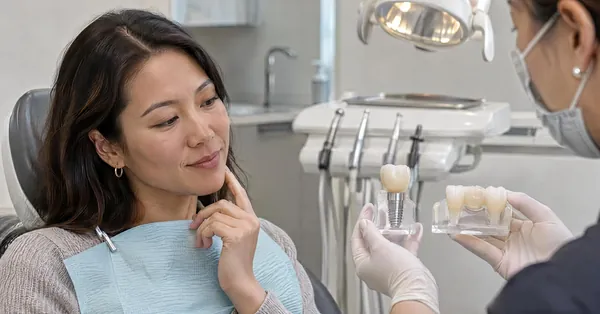
People often begin their research by searching for a dentist in San Francisco who can replace a missing tooth and then run into a confusing mix of opinions: implants, bridges, partials, "same-day" promises, and more. This article gives you a practical comparison so you can walk into your consultation with the right questions.
TL;DR - How Most Patients Decide
For many patients considering dental implants in San Francisco, the deciding factors are not hype. They are the condition of the teeth next to the gap, how you bite and chew, your comfort with maintenance, and whether you want to keep neighboring teeth untouched.
- Choose an implant when you want to replace just the missing tooth without crowning the teeth next to it.
- Choose a bridge when the adjacent teeth already need crowns or when a non-surgical fixed option is preferred.
- Back-teeth bite forces and grinding habits can change which option is more predictable.
- Maintenance matters: bridges can require special flossing; implants require consistent home care and professional checkups.
- The recommendation can change if gum health, bone support, or the condition of neighboring teeth changes.
In our previous blog, "Good Candidate for Dental Implants? SF Guide," we discussed candidacy. In this article, we focus on how patients compare implants and bridges when both are potentially on the table.
The Two Options, Defined Simply
Dental Implant (With an Implant-Supported Crown)
An implant-supported crown replaces a missing tooth by anchoring a crown to a dental implant. In many cases, it can avoid involving the teeth next to the gap. To explore the service in more detail, see our page on dental implants in San Francisco.
Traditional Dental Bridge
A traditional bridge typically replaces a missing tooth by placing crowns on the teeth on either side of the gap (abutment teeth) with a replacement tooth connected between them. Our dental crowns and bridges page explains how bridges can restore function and appearance when designed for your bite.
What Changes the Recommendation: The Decision Points Dentists Weigh
1) The Health of the Teeth Next to the Gap
This is often the biggest swing factor. If the adjacent teeth are healthy and structurally strong, many patients prefer an option that keeps those teeth intact. If an adjacent tooth already needs a crown due to a large filling, cracks, or past damage, a bridge can become a more logical "two birds, one plan" solution.
2) Where the Missing Tooth Is and How You Bite
Front-tooth replacement is often about appearance and speech, while back-tooth replacement is more about chewing load. Heavy bite forces, clenching, or grinding can influence material choices and the design of either restoration.
3) Long-Term Cleaning and Your Comfort With Maintenance
Both implants and bridges require daily home care. The key difference is how you clean around them.
- Implant crown: often cleaned similarly to a natural tooth, with brushing and flossing around the crown.
- Bridge: commonly needs a technique to clean under the replacement tooth so plaque and food do not accumulate.
4) What You Want to Preserve (Tooth Structure vs. Bone Support)
A bridge relies on teeth, while an implant is supported by the jawbone. Patients who prioritize preserving neighboring tooth structure often lean toward implants. Patients who prioritize avoiding surgery or already need crowns may lean toward a bridge.
5) Timeline Tolerance (Not a Step-by-Step, Just the Reality)
Many people want the shortest path to a complete smile, especially if the gap is visible. A bridge is sometimes completed over a shorter window. Implant treatment can require planning around healing and coordination of the final restoration. The right approach is the one that matches your clinical needs and what you can realistically commit to.
Real-World Scenarios: How Many Patients End Up Choosing
Scenario A: One Missing Tooth With Two Healthy Neighboring Teeth
When the teeth next to the space are healthy, many patients lean toward an implant because it can avoid preparing those adjacent teeth. This is a common reason patients shopping for "Dental Implants San Francisco" ultimately choose implants after learning what a bridge involves.
Scenario B: A Missing Tooth and the Adjacent Teeth Already Need Crowns
If the adjacent teeth are already heavily restored or weakened, a bridge can be a practical plan that restores three teeth in one design. In our experience, patients often feel more confident once they see that the recommendation is not one-size-fits-all. It is based on what will be most stable and maintainable for their specific mouth.
Scenario C: Multiple Missing Teeth in a Row
Treatment planning can become more complex with longer gaps. Options may include implants, bridges, or other restorative approaches based on support, chewing forces, and cleanability. A comprehensive evaluation is the best way to map this out.
Questions to Ask at Your Consultation (Implants or Bridge)
- What is the condition of the teeth next to the gap? Are they strong, filled, cracked, or already crowned?
- How will I clean this? What tools will I need at home?
- What is the long-term maintenance plan? What should I expect at checkups?
- How does my bite affect the design? Especially if I clench or grind.
- What happens if something fails? Ask what is repairable vs. what would require replacing the restoration.
How This Fits Into Choosing a Dentist and Dental Office
If you are comparing practices, you are not just picking a procedure, you are picking a planning philosophy. The best conversations are transparent about tradeoffs (not just benefits) and focus on helping you choose a solution you can maintain comfortably.
If you are still in the research phase and want a broader checklist, our article on questions that matter when choosing a dentist can help you compare a dental office in a more practical way.
FAQs
Not always. Dental implants and bridges can both be excellent solutions. Implants replace the tooth without relying on adjacent teeth, while a bridge uses neighboring teeth to support the replacement. The best choice depends on the health of the adjacent teeth, bite forces, bone support, and your priorities for maintenance, timeline, and long-term planning.
A bridge may be recommended when the teeth next to the gap already need crowns, when an implant is not a fit due to medical or anatomical factors, or when a patient prefers a non-surgical option. A dental exam helps clarify whether a bridge can be designed to be stable and cleanable long-term.
A traditional bridge typically requires reshaping the adjacent teeth so crowns can support the replacement tooth. That is not automatically a problem, especially if those teeth already have large fillings or need crowns, but it is an important tradeoff to understand compared with an implant, which usually does not involve preparing neighboring teeth.
An implant crown is often simpler to clean like a natural tooth (brushing and flossing), while bridges usually require special flossing tools to clean under the replacement tooth. Maintenance is very manageable for both when you have the right technique and keep up with regular dental visits.
An evaluation typically includes a review of your goals, an exam of the teeth and gums around the missing tooth space, and planning for how the final tooth will look and function. Your dentist will also discuss whether an implant or bridge is the better match for your bite, adjacent teeth, and long-term maintenance.
Related Reading
- Dental implants service page
- Dental crowns and bridges service page
- Dental implant cost drivers
- Common myths about dental implants
- Meet Dr. Nigel Suarez
Conclusion
A bridge can be an excellent fixed solution, and an implant can be an excellent single-tooth replacement. The best answer depends on the condition of the teeth next to the gap, your bite, and what you want to preserve long-term. A clear, unbiased consultation should explain the tradeoffs in plain language, not just sell a procedure.
Schedule a Tooth Replacement Consultation
If you are comparing a bridge and dental implants, our team at SOMA Dental Practice of Nigel Suarez DDS can help you sort through the decision points and choose a plan that fits your health goals and budget. Call (415) 558-9800.
Prefer online details first? Visit our contact page to request an appointment.